Network-Level Phone Controls for Families
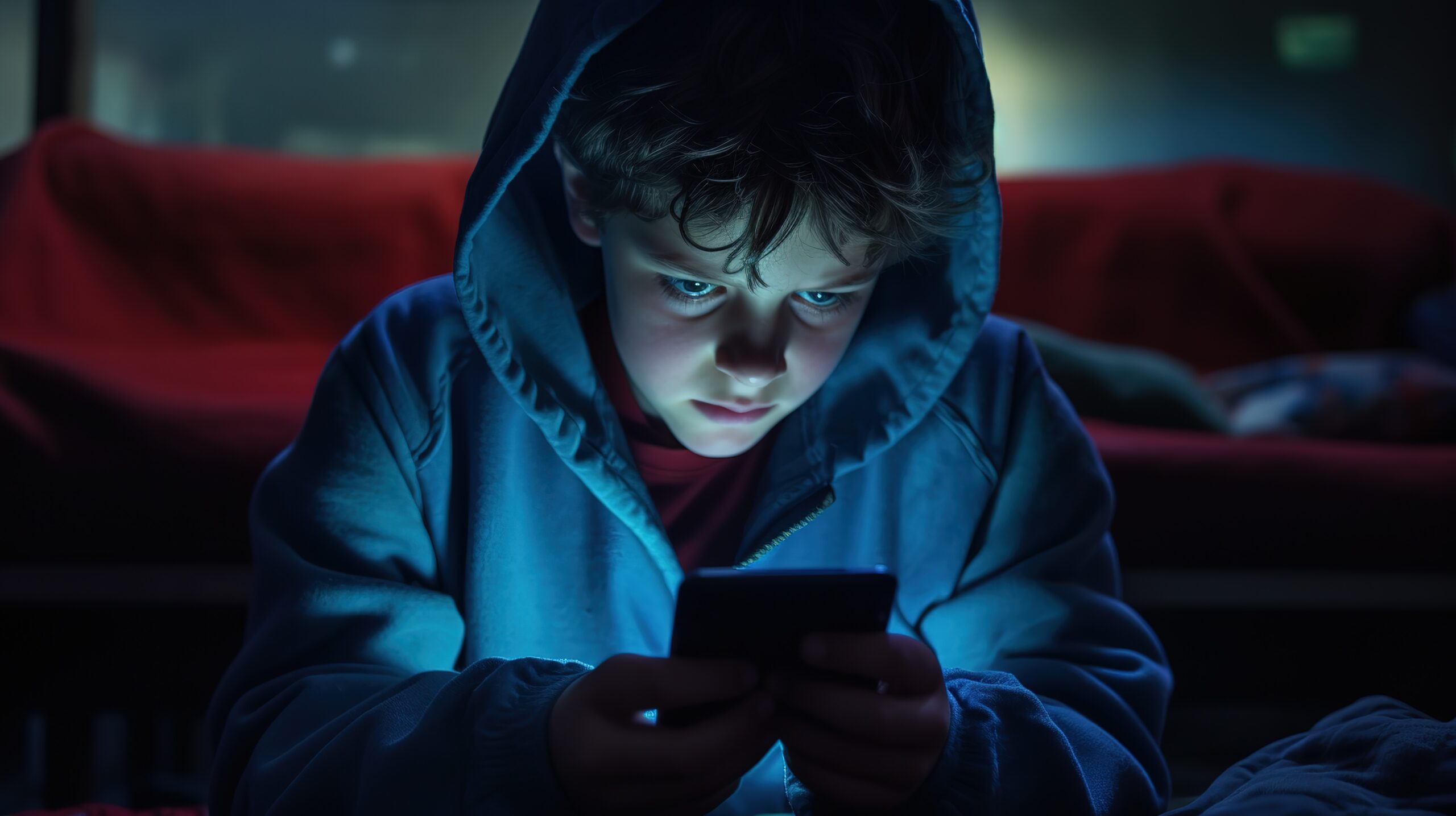
Protecting Your Children
Radiant Mobile: “Network-Level” Phone Controls for Families
Wouldn’t it be great if your children or others couldn’t circumvent the parental control apps on their phones? Wouldn’t it be great if content could be blocked at the network-level before the content reaches the cell tower or your children’s phones?
Well, the technology has arrived, and Radiant Mobile is making its debut with a phone service, not an app, that provides network-level blocks or “hard blocks” that filter out at least 11 content areas. In other words, even the adults cannot unblock them. Plus, there are over 100 other content areas that can be filtered at the phone level.
Know the Law and Your Rights
Yet, some groups are crying foul. Why? The reasons vary. Some groups want to promote an ideology. Some want your children as consumers. Some are predators who want to reach children with pornography and other harmful topics. So, as these groups push back against network-level controls, how do you push back against them? By knowing a little bit about the laws that protect your children and your constitutional rights.
Laws and Rights that Protect Children
1. Federal Law: The Children’s Internet Protection Act
Parental controls on your children’s phones, whether on an app or at the network-level, are much like internet blockers in schools and libraries that are required by federal law. In 2000, Congress enacted the Children’s Internet Protection Act (CIPA). CIPA requires schools and libraries that receive federal monies to install internet software that blocks obscenity, pornography, and materials considered dangerous to minors.
The bottom line is that CIPA protects children’s internet usage in schools and libraries, much like apps and network-level blocks protect children on their phones – all in keeping with federal law. For more information on CIPA, go to the Federal Communications Commission (FCC) Consumer Guide here. To file an online CIPA complaint, click here.1
2. Obscenity is “Unprotected Speech”
If opposing groups claim that obscenity is “speech” under the First Amendment, remind them that obscenity is “unprotected speech.”2 As a result, government can restrict and even punish obscenity using criminal laws and other restrictions. Moreover, the First Amendment does not give individuals and groups the right to “speak” to your child. The First Amendment protects against government regulation of speech.3 Just as individuals and groups cannot appear at your door and demand to speak to your children in person, they cannot do so over their phones. Why? Because you have constitutional rights.
3. U.S. Constitution: Parental Rights and Religious Freedom
The U.S. Constitution protects the rights of parents to make decisions regarding “the care, custody, and control of their children,” to “direct the religious upbringing and education of their children,” and to opt-out of LGBTQ+ content in public schools. 4 If parents have these constitutional rights and can opt-out of this content in public schools, they can certainly opt-out at home using either parental control apps or network-level blocks. Here are just a few quotes from U.S. Supreme Court decisions:
“The history and culture of Western civilization reflect a strong tradition of parental concern for the nurture and upbringing of their children. This primary role of the parents in the upbringing of their children is now established beyond debate as an enduring American tradition.”5
Drawing on ‘enduring American tradition,’ we have long recognized the rights of parents to direct ‘the religious upbringing’ of their children.” And this is not merely a right to teach religion in the confines of one’s own home. Rather, it extends to the choices that parents wish to make for their children outside the home. . . . As a result, the right of parents “to direct the religious upbringing of their” children would be an empty promise if it did not follow those children into the public school classroom.” 6
“If there is any fixed star in our constitutional constellation, it is that no official, high or petty, can prescribe what shall be orthodox in politics, nationalism, religion, or other matters of opinion or force citizens to confess by word or act their faith therein.” 7
“[We] hold that the [school’s] introduction of the ‘LGBTQ+ inclusive’ storybooks – combined with its decision to withhold notice to parents and to forbid opt outs – substantially interfered with the religious development of their children and imposes the kind of burden on religious exercise that Yoder found unacceptable.” 8 “The [school’s] ‘LGBTQ+ inclusive’ curriculum and no-opt-out policy pursues the kind of ideological conformity that Pierce and Yoder” prohibit.”9
4. State Laws Prohibiting Obscenity and “Material Harmful to Minors”
Every state makes it a crime to provide obscene or harmful material to minors. Every state also defines “obscene material” or “material harmful to minors” and establishes the consequences or punishment. Parental controls on your children’s phone, whether on an app or at the network-level, are consistent with these state criminal laws.
As an example, Georgia’s “material harmful to minors” law makes it unlawful to sell, loan, or furnish to a minor: (1) Any picture, photograph, drawing, sculpture, motion picture film, . . . of a person or portion of the human body which depicts sexually explicit nudity, sexual conduct, or sadomasochistic abuse and which is harmful to minors; (2) Any book, pamphlet, magazine, . . . .” Criminal penalties apply. O.C.G.A. § 16-12-103. To see your state’s obscenity law, click here.
The Exemptions….
If you are wondering how this content is allowed on the internet, it is because Congress gave an exemption to internet service providers and “discussion forums” in Section 230 in the Communications Decency Act of 1996. 10 If you are wondering how this content is allowed in schools, it is because 44 of the 50 states give schools and/or libraries exemptions to these criminal laws.11 Most of these exemptions were implemented in the 1960’s and 70’s when public schools started teaching sex education. Yet, they are huge loopholes that allow schools and libraries to give sexualized content to children that, if your neighbor gave it, they could be charged with a crime and potentially locked-up.
Challenging Obscenity Exemptions
Unfortunately, no one has made a serious legal challenge to obscenity exemptions based on their constitutional rights. Nonetheless, state obscenity laws are still enforced and may be the basis for a criminal complaint against those who initiate the harmful content. For more on challenging obscenity exemptions see Brolly, Kelly, “Laws, Rules, and Rights: A Guide to Protecting Children in Public Schools,” Double Umbrella Publications, LLC (2023), pp. 56-62.
If you believe you have a basis for a criminal obscenity complaint, immediately contact the police and/or an attorney in your jurisdiction. For assistance finding an attorney, you can contact your state’s bar association. Please act immediately because time limitations called statutes of limitations may apply to your situation.
5. DHS: Stopping Online Child Exploitation with “Know2Protect”
Parental Controls on your children’s phones are also consistent with to Know2Protect, the Department of Homeland Security’s national public awareness campaign to stop online child sexual exploitation. To learn more about online enticement, how to prevent it, and resources for survivors, go to Know2Protect. To report an incident, call the Know2Protect Tipline at 1-833-591-KNOW (5669) or Cyber Tipline at https://report.cybertip.org.
Hope for Families
Phone service plans with network-level blocks are a welcomed advancement to protect children and families. Likewise, parental control apps for phones are continually improving. Now, it is our job as parents and concerned citizens to support and defend them – along with our constitutional rights.
Disclaimer: This article is for educational purposes only. No information contained in this article should be construed as legal advice, does not create an attorney-client relationship, nor is it intended to be a substitute for legal counsel on any subject matter. Readers are encouraged to contact an attorney in their jurisdiction with any questions.
Kelly Himes Brolly is an attorney, author, consultant, and the Managing Member of Double Umbrella Publications, LLC, d/b/a Double Umbrella Consulting. To order Kelly’s book, “Laws, Rules, and Rights: A Guide to Protecting Children in Public Schools,” Double Umbrella Publications, LLC (2023), go to Amazon here. For more information, see Kelly’s podcast on ThinQ Media titled “The Informed Parent.” To learn more about parental rights and public schools in all 50 states, go here or to www.doubleumbrellapublications.com.
References:
1 Unfortunately, the American Library Association was willing to let children be exposed to this content and even sued the federal government claiming that the internet software required by CIPA was an unconstitutional restriction of library patrons’ First Amendment rights. The U.S. Supreme Court disagreed and upheld CIPA. U.S. v. American Library Ass’n, 539 U.S. 194, 206-207 (2003).
2 Roth v. U.S., 354 U.S. 476 (1957) (holding that obscenity is unprotected speech); Ginsburg v. New York, 390 U.S. 629 (1968) (holding that states may use a different definition of obscenity for material deemed harmful to minors than the definition of obscenity for adults). Unprotected speech also includes: false or deceptive advertising (Bd. of Tr. of State Univ. of New York v. Fox, 492 U.S. 469 (1989)), fighting words (Bd. of Tr. of State Univ. of New York v. Fox, 492 U.S. 469 (1989)), and defamation (using state tort laws).
3 The First Amendment protects against government regulation of speech. It states: “Congress shall make no law respecting an establishment of religion, or prohibiting the free exercise thereof; or abridging the freedom of speech or of the press, or the right of the people peaceably to assemble, and to petition the Government for a redress of grievances.” U.S. CONST. amend. I (Emphasis added). The plain language of the Free Speech Clause restricts federal government regulation of speech. The Free Speech Clause has also been extended through caselaw to restrict state and local government regulation of speech. Cantwell v. Connecticut, 310 U.S. 296, 303 (1940) (discussing the incorporation of these rights through the Due Process Clause of the Fourteenth Amendment).
4 Mahmoud v. Taylor, 606 U.S. 522 (2025) (stating, “we hold that the [school’s] introduction of the ‘LGBTQ+ inclusive’ storybooks – combined with its decision to withhold notice to parents and to forbid opt outs – substantially interfered with the religious development of their children and imposes the kind of burden on religious exercise that Yoder found unacceptable”); Troxel v. Granville, 530 U.S. 57 (2000) (stating that the U.S. Constitution “protects the fundamental right of parents to make decisions concerning the care, custody, and control of their children”); Santosky v. Kramer, 455 U.S. 745 (1982) (recognizing “fundamental liberty interest of natural parents in the care, custody, and management of their child”); Wisconsin v. Yoder, 406 U.S. 205, 213-214 (1972) (stating “the Court’s holding in Pierce stands as a charter of the rights of parents to direct the religious upbringing of their children” and recognizing “liberty of parents . . . to direct the upbringing and education of children”); Pierce v. Society of Sisters, 268 U.S. 510 (1925) (parents have the right “to direct the upbringing and education of children under their control”); Meyer v. Nebraska, 262 U.S. 390 (1923) (concluding that the state legislature unconstitutionally interfered “the power of parents to control the education of their own”).
5 Wisconsin v. Yoder, 406 U.S. 205, 232-233 (1972).
6 Mahmoud v. Taylor, 606 U.S. 522 (2025).
7 W.Va. State Bd. of Educ. v. Barnett, 319 U.S. 624, 633-34 (1943).
8 Mahmoud v. Taylor, 606 U.S. 522, 543-544 (2025). Charter schools are also public schools and are impacted by the Court’s decision. However, the case does not directly impact private schools because the First Amendment protects against government infringement of constitutional rights. Private schools are not government-run schools.
9 Mahmoud v. Taylor, 606 U.S. 522 (2025), J. Thomas, concurrence p. 8.
10 Congress allowed internet service providers and “discussion forums” to be exempt from defamation and other laws under Section 230 of the Communications Decency Act of 1996. 47 U.S.C. § 230. Section 230 states, “No provider or user of an interactive computer service shall be treated as the publisher or speaker of any information provided by another information content provider” and “[n]o cause of action may be brought and no liability may be imposed under any State or local law that is inconsistent with this section.” While the actual person or entity (such as news media) that posts the statements is potentially liable, the “discussion forum” that is the “deep pocket” is not under Section 230.
11 Reisman, Judith A., and McAlister, Mary E., “Materials Deemed Harmful to Minors Are Welcomed into Classrooms and Libraries via Educational “Obscenity Exemptions,” Liberty University Law Review, Vol 12: Iss. 3, Article 3, 2018. Brolly, Kelly, “Laws, Rules, and Rights: A Guide to Protecting Children in Public Schools,” Double Umbrella Publications, LLC (2023), Appendix A for the citations to various state obscenity laws and exemptions. For more information on obscenity exemptions, see Kelly’s podcast on ThinQ Media titled “The Informed Parent.”