Sine Die, Longa Die, – and Inutilis Die?
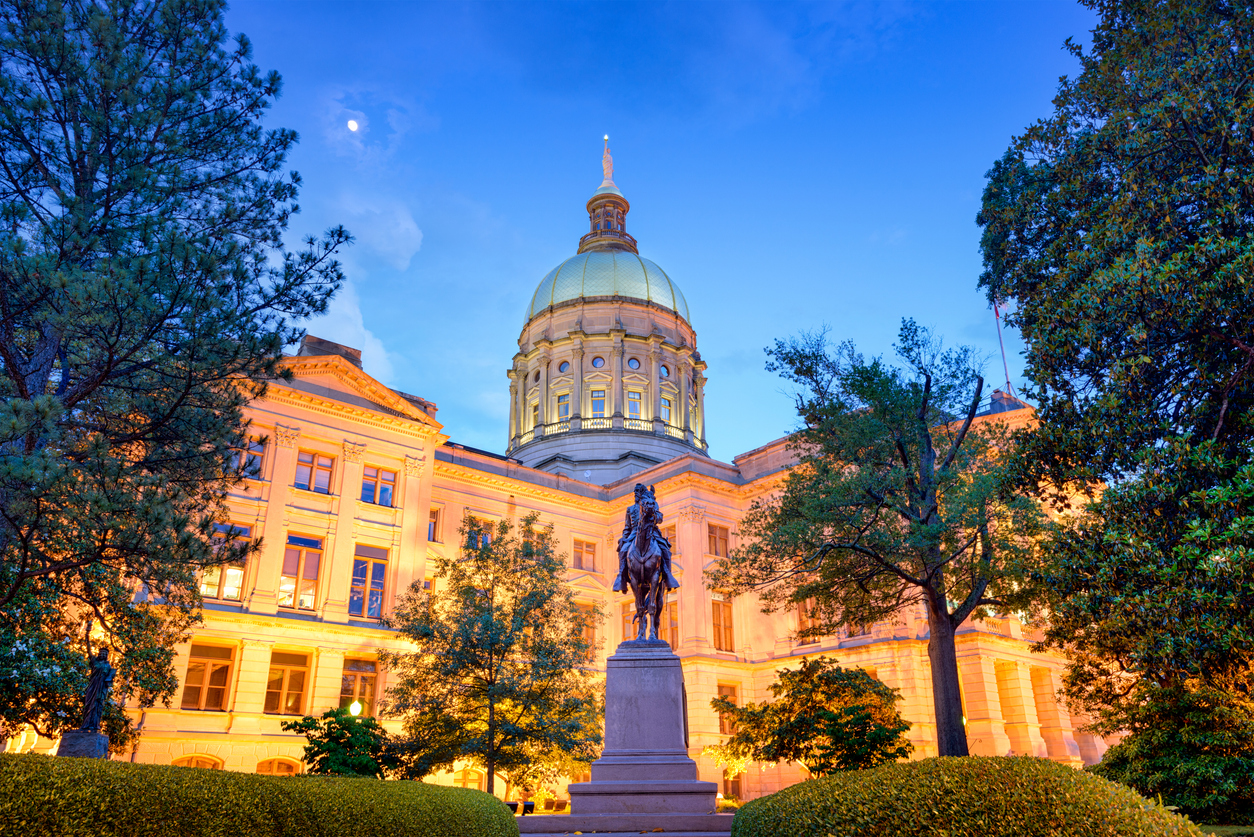
Sine Die, the last day of the Georgia legislative session, was a long day – it lasted from 8 a.m. until 1 a.m. the next morning. And from the perspective of some citizens who dutifully attended and stayed the course until closing time, it was a useless and unprofitable day.
Of course, opinions on legislative outcomes vary, depending on individual perspectives and priorities.
But for attendees who strongly believe that election integrity, parental rights, and medical freedom are critical issues in this state, Sine Die marked the end of a legislative session that was a disappointment.
Though there were some positive takeaways, overall, the 2025-2026 session fell short of many citizens’ hopes.
What Happened on Sine Die?
Here’s a summary report from some who were there:
The day and night included the customary Sine Die activities – legislators running between chambers trying to get bills passed (or not), impromptu meetings, members saying “red!” “green!” for vote influence, farewell speeches, and the finale of legislators throwing papers in the air, celebrating the end of the session.
This description conjured an image of a game of “paperwork shuffle,” where players run around trying to earn points by convincing others that their papers are the best. In the end, no matter who wins, the players throw their papers in the air and cheer. Then everyone goes home, including the disappointed citizens in the gallery.
Maybe that isn’t a fair description.
But what did happen with the real business of the day?
Breakdown of Some Bills:
The only bill constitutionally required for the Georgia legislators to vote on and pass is the appropriations bill (the budget). It did pass, albeit late. For those whose jobs depend on that budget, it was the most important vote of the day. Some waited until the vote – and then left, secure in knowing their Monday morning would be routine
Election Integrity
All government, of right, originates with the people, is founded upon their will only, and is instituted solely for the good of the whole. Public officers are the trustees and servants of the people and are at all times amenable to them. Georgia Constitution Section II Paragraph I
Election Integrity goes to the heart of what many consider foundational to the preservation of our Constitutional Rights. Yet the assembly failed to pass any election integrity bills.
Those we interviewed had plenty to say about election integrity legislation – the topic garnered more discussion and emotion than any other.
In summary (of a lot of information), here’s what we learned:
QR Codes
The assembly failed to pass legislation concerning QR codes, despite the passage of SB 189 two years ago. SB 189 states that QR codes cannot be used in the voting process. (Voters likely remember the QR codes on your printed ballots that you scanned into the machine. This machine was counting your vote, based on the QR code)
Why the debate about QR codes? Critics argue that the QR code could possibly be inaccurate or manipulated to misrepresent actual votes. In other words, voters can’t leave the poll with assurance that their vote was accurately tallied.
But, instead of passing legislation to set a timeline for removing the codes, the “kick the QR code down the road” move was played.
This seemingly irresponsible tactic left the situation open-ended and the public confused. Now, if a special session is not called, the issue of QR code removal will go to the courts, at taxpayer expense. If it goes to court, the court will likely maintain the status quo and allow QR codes in the November election.
Senate Bill 214 Didn’t Pass
SB 214 (which didn’t pass) was a bill intended to begin remedying the QR code situation. SB 214 would have removed the BMD (Ballot Marking Device) that produces the code. Supporters of SB 214 wanted to reset the timeline of removing QR codes and then replace the system with hand-marked ballots.
There was another reason to support this bill on Sine Die: the hope was to get an election bill over to the Senate, where they could disagree, then enter a conference committee, and add better language to the bill that would enable the removal of the QR code.
Others argued that SB 214 was not a good bill for election security, and the best course of action would be to stop the bill and force a special session. There was also hope that the House would take up the better Senate Bill 960, but with Jon Burns as speaker and Kemp as governor, it was felt this had a very low probability of success.
What Will Happen if the Issue goes to Court
The other concern is that, without 214 passing, we might have the courts decide the QR codes issue rather than hold a special session. As previously mentioned, the courts are not likely to make a positive change and will very likely continue to “kick the QR code down the road” (as was planned by SB 214).
SB 214 was not the best of the election bills. There were other, better bills that never even reached a floor vote in the House.
SB 960 was never brought to the House for a vote
SB 960 was viewed as a good bill by those interviewed. But it was never even brought to the House floor for a vote.
Proponents of 960 cite a couple of benefits, including shifting the election audit from the State to the State Election Board (SEB). In other words, the SEB would conduct the election audit, not the Secretary of State. This change would have occurred in the November elections.
Proponents view an SEB election audit as more reliable because the SEB has attempted to help fix elections in Georgia, while the Secretary of State’s office has been satisfied with the status quo.
Furthermore, this bill enabled on-demand printing, allowing voters to use hand-marked ballots and skip the BMD and QR code.
SB 960 would satisfy the requirements of SB 189 from 2024, which made the QR code illegal. SB189 was important – but in Georgia code, the QR code is already illegal because electors (voters) need to know who they voted for. Therefore, any system without an audit or verification that the correct vote is illegal.
Other Bills that didn’t move forward
There were other election integrity bills that would have gone further towards improving and securing elections.
For example, HB397 enabled the state to leave ERIC, the Electronic Registration Information Center, a multi-state compact for voter registration. This system has faced significant criticism, leaving the state with subpar and insecure voter rolls.
HB 397 also required election night precinct-level reporting to be posted publicly. (This was a great piece of legislation passed by Florida a few years ago to secure its election system.)
SB 423 also failed to pass on Sine Die. This bill would have prevented campaigns from raising more than half of their funds from outside Georgia, securing Georgia elections as supported by Georgians. The House never took up this bill.
There is so much history, information, and debate over election integrity in Georgia that the topic deserves ongoing attention and is unlikely to be resolved any time soon.
Parental Rights
Nothing passed in the arena of Parental Rights.
SB 74, the library loop bill, was not passed. This bill would have helped to eliminate the loophole that exempts public and school or university libraries in Georgia from the ban on distributing obscene media to youth under 18. In other words, kids can still legally be exposed to porn in the library, since SB 74 didn’t pass. You can read about that bill HERE
HB 54 didn’t pass, which would have banned the use of puberty blockers in Georgia.
Even SB 425, a straightforward bill to require teaching cursive handwriting in schools, failed to pass. The bill would have required schools to teach cursive in grades 3-5.
Medical Freedom
No bills concerning medical freedom passed.
At the grassroots level, it was hoped that the Over-the-Counter Ivermectin bill would pass (as it has in five other states). It passed the House but did not pass the Senate.
“There was nothing remotely helpful for medical freedom out of all the bills that were passed on Sine Die” , according to one attendee.
Other Concerns
SB 572, an expanded Stand Your Ground bill, didn’t pass. The proposed legislation made it harder to prosecute the use of force in self-defense, allowing for faster immunity from prosecution.
SB 499, the Silencer Bill, failed to pass. This bill sought to remove firearm suppressors (silencers) from the state’s list of “dangerous weapons”. The bill aimed to remove state-level penalties for possession of suppressors, aligning Georgia law with federal regulations under the National Firearms Act. [1, 2, 3
Human Trafficking
The Senate, which has a positive track record in fighting human trafficking, failed to pass a good House bill on this topic. The interstate trafficking bill (HB421) was tabled on the 39th day of the session and was not returned to the floor for a vote. It would have likely passed on a bipartisan basis.
Passage of HB 421 could have been an example of the Senate vs House working together in an area that garners a lot of public support. This bill would have made the trafficking of people across state lines a state crime, adding a state charge to something already illegal at the Federal level.
AI Centers
No bills were passed that included the curtailment of AI data centers. In summary, AI centers use substantial resources, such as water and electricity, from the local areas where they are established. As things stand, the local community risks subsidizing AI data centers due to the resources they consume and the ambiguity around fiscal responsibility. There is also the question of the destruction of the natural environment.
The resounding sentiment was that Georgia citizens deserve a comprehensive study and disclosure of the risks posed by AI data centers, followed by legislation to mitigate those risks.
Some Positive Bills
Obviously, the legislative session and Sine Die weren’t all bad. There were some positive bills that did pass on Sine Die:
HB 1409 revised the mandatory child abuse reporting system to include additional reporters, such as firefighters and animal control workers. It also introduced secure web-based reporting platforms.
The bill also incorporated the “Epstein Amendment,” allowing open record requests for sexual harassment settlements (with taxpayer money) involving state legislators.
HB 295 gives property owners the right to sue governments for loss of value due to failure to handle homelessness, panhandling, and illegal immigration.
House Bill 1247 – the Georgia Bureaucratic Deference Elimination Act limits state agencies’ power to interpret laws. It requires courts to interpret laws independently rather than deferring to agency interpretations.
Who Was There on Sine Die
In addition to the legislators and auxiliary staff, there were lobbyists, citizen activists, and special interest groups. Out of these last three groups, the citizen activist group was the smallest, perhaps 20%. There should have been more citizen activity – perhaps it could have made a difference.
The Take Away
It could have gone better this session, but how? A thumbnail analysis by attendees suggests the following:
- There has to be a stronger connection between legislators and the people.
- We must work with legislators year-round, not just during the legislative session.
- We need to educate legislators, answer their questions, and provide support (for example, by bringing in prestigious witnesses). Help them answer questions from other legislators and give them ammunition to fight the lobbyists.
- We need to educate citizens on why they need to engage with legislators. More people need to take action.
In Summary
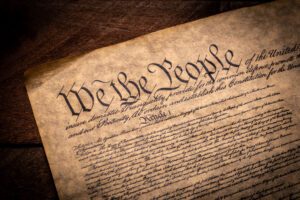
We no longer have a government of We the People. One point of evidence is the fact that out of the groups at Sine Die, the citizen activists group was relatively small. Several concerned citizens worked their hearts out the entire legislative session and they are to be commended and thanked. But more people were (and will be) needed to make a real difference.
The preambles of both the United States Constitution and the Constitution of the State of Georgia state, “We the People”.
Preamble of the US Constitution
We the People of the United States, in Order to form a more perfect Union, establish Justice, insure domestic Tranquility, provide for the common defence, promote the general Welfare, and secure the Blessings of Liberty to ourselves and our Posterity, do ordain and establish this Constitution for the United States of America. (emphasis added)
Preamble of the Georgia Constitution
To perpetuate the principles of free government, insure justice to all, preserve peace, promote the interest and happiness of the citizen and of the family, and transmit to posterity the enjoyment of liberty, we the people of Georgia, relying upon the protection and guidance of Almighty God, do ordain and establish this Constitution. (emphasis added)
An Invitation
Will you join We the People, roll up your sleeves, and do what it takes to take back Georgia and the rest of our country?
Nobody said maintaining freedom was easy. It never has been. But (outside of your faith) can you think of anything more worthwhile?