
The Budget Debate in Roswell is Just Beginning
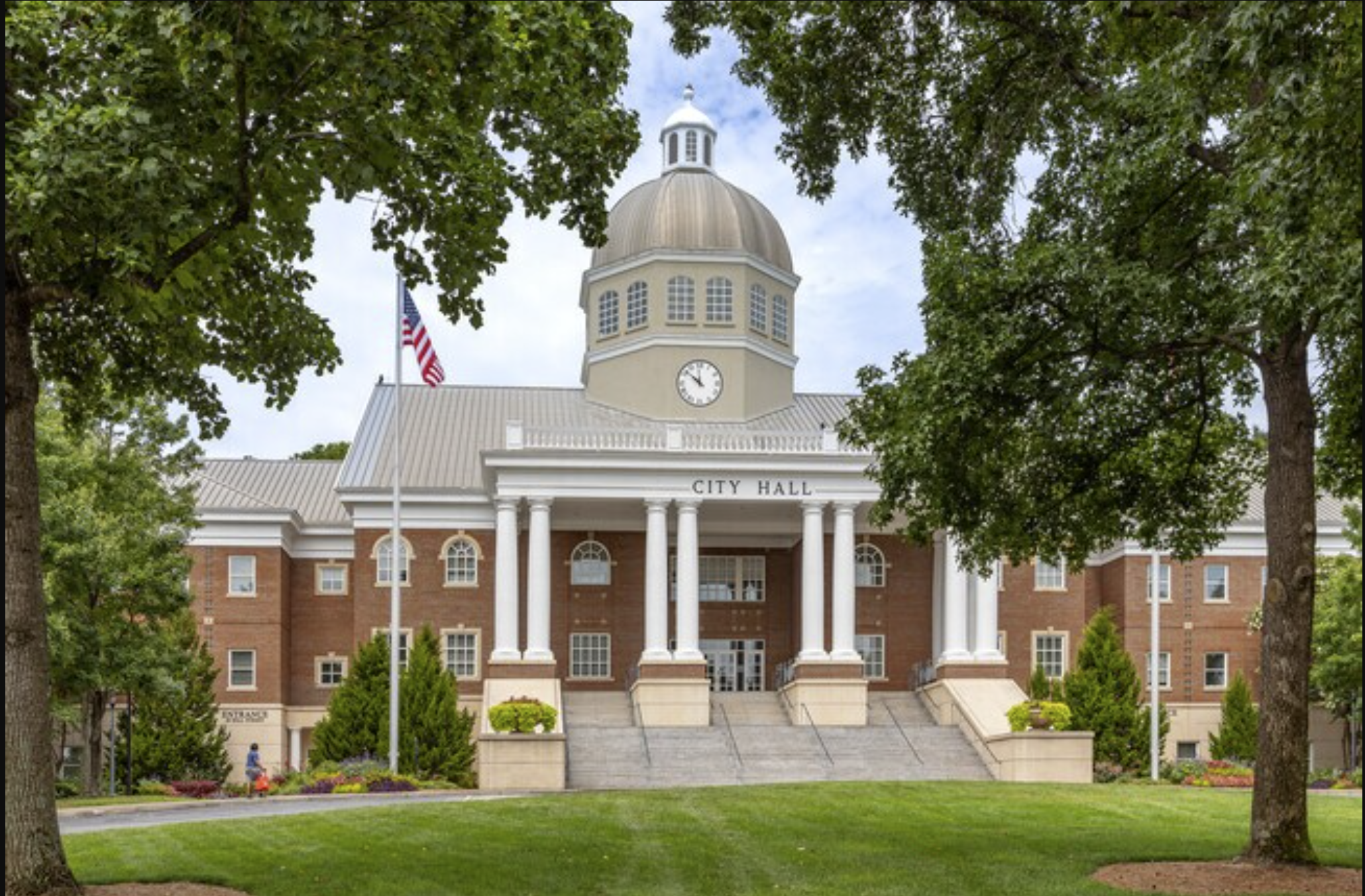
Roswell’s Millage Debate Is Over. The Budget Debate Is Just Beginning.
For nearly a month, Roswell residents studied spreadsheets and packed meetings at City Hall to question Roswell city government about a proposed property-tax increase that began at 7.732 mills. That’s a 56.2% increase!
On September 28, it ended very differently than how it began.
The Roswell City Council adopted a total 2026 millage rate of 5.232 mills:
- The Maintenance and Operations rate remained at 4.049 mills, unchanged from 2025,
- The debt-service rate increased from .900 to 1.183 mills to service voter-approved bond debt (loans)
The result matters.
But to move forward effectively, it’s important to understand what happened, the Roswell budgeting process, and where we go from here.
A Central Issues Emerges
Understanding how Roswell moved from a proposed 7.732 to 5.232 may matter even more as the City of Roswell begins consideration of its Fiscal Year 2027 budget.
Because the central issue that has emerged during September is not simply taxes.
It is how Roswell makes major financial decisions.
Let’s Start with Who Builds the Budget
To understand the millage debate, it is important to understand the roles of the Mayor, city staff, and the City Council.
- The Roswell city charter identifies the Mayor as the City’s chief executive officer, responsible for the efficient and orderly administration of City affairs.
- City staff and the Budget Office develop the financial information and annual budget through the City’s administrative process.
- The Mayor then reviews the budget and presents it to the Council.
The Role of City Council
Council occupies a different role. It sets the millage rate and ultimately approves—or changes—the annual budget.
That distinction is important because Council does not begin the process by independently constructing six competing city budgets.
It receives financial information, recommendations, and ultimately a proposed spending plan from the City’s executive and administrative process, examines it, asks questions, proposes changes, and votes on the budget.
Financial Analysis
And it makes the sequence of Roswell’s 2026 millage debate noteworthy.
What City Council Knew About Fiscal Year 2026
By August, Roswell was well into its existing FY2026 budget.
Roswell was not a city facing an unexpected current-year operating deficit.
At the August 11 Committees of Council meeting, staff presented the City’s second-quarter financial forecast.
The forecast projected approximately $107.7 million in General Fund revenues against approximately $111.1 million in expenditures. (Fund revenue refers to the income, receipts, or financial resources that are collected by an entity. Roswell fund revenues primarily come from charges for services provided by the city, taxes, and grants.)
Fund Balance Budget
That does not mean revenues exceeded expenditures. Roswell had intentionally adopted a budget using fund balance for certain expenditures. (Fund balance is the net financial position or equity of a governmental fund calculated as total assets minus total liabilities.)
The important comparison was with the budget itself.
Roswell had planned to use approximately $8.4 million of General Fund balance. By Q2, staff projected that approximately $3.4 million would be needed.
In other words, the existing FY2026 budget was forecast to perform approximately $5 million better than planned in its use of fund balance.
This is the starting point for understanding what happened next.
What Happened Next
On September 2, after receiving input from her staff, Mayor Mary Robichaux and her Chief of Staff announced the proposed millage increase to 7.732 mills, followed by an official notice appearing in the Alpharetta-Roswell Herald on September 3,
The proposed 2026 millage rate of 7.732 mills— breakdown was 6.549 mills for Maintenance and Operations and 1.183 mills for debt service. Compared with the previous total rate of 4.949 mills, the advertised rate represented a 56.2 percent increase in the total City millage rate.
So, within weeks, despite the positive budget forecast, the administration was asking Council to promote a dramatically higher property-tax rate. But the situation had become even odder – the Mayor did not share the proposed millage increase with City Council until AFTER her big announcement.
From a Better-than-planned Forecast to a 56.2 Percent Tax Increase
Mayor Mary Robichaux argued that Roswell had significant unmet needs: aging buildings, roads, fleet replacement, fire equipment, ADA improvements, and other capital requirements.
Her justification for the tax increase was met with public pushback and heavy debate in City Hall.
The citizen debates were not based on denial of the needs the Mayor mentioned. Those deserve examination. But most citizens understood that something was wrong at the core of the entire process. The feeling of wrongness was palpable – one didn’t have to be an accountant to know that things weren’t adding up. So, determined to find answers, the bright citizens of Roswell did some sound research on the process, poured over the numbers, and explained to the rest of us what happened.
There was a fundamental missing step between identifying needs and determining a tax rate:
The Missing Step
What was the actual funding gap?
The Legislative Record Did Not Show the Calculation of the Funding Gap.
They could find the proposed millage rate.
What they could not find was the financial bridge explaining how the City arrived at the proposed increase.
The agenda item listed:
Committee or Staff Recommendation: N/A
and
Financial Impact: N/A.
Requesting an Increase in Taxes Without Full Analysis
What Wasn’t There
There was no attached analysis beginning with the existing FY2026 budget and walking Council and residents through:
Current FY2026 financial performance.
Existing appropriations.
Available and restricted fund balance.
Projects already funded.
Alternative funding sources.
Grants.
TSPLOST or other dedicated revenues. (Special Purpose Local Option Sales Tax)
Financing.
Projects that could be phased.
Projects that could be deferred.
Potential reductions elsewhere.
And finally:
The Funding Gap
The remaining amount that requires additional property-tax revenue.
That last number is the funding gap.
And the funding gap—not the gross value of requested projects—is what should connect a list of needs to a requested tax rate.
The $18 Million List
More detailed information did exist.
But it was not attached to the millage agenda item.
A detailed spreadsheet was shared only after residents personally requested additional information from a Councilmember.
The spreadsheet contained a workbook with approximately $23.4 million in proposed expenditures, reduced by an anticipated $5 million in fund balance to approximately $18.4 million.
It included roads, fleet, buildings, fire equipment, health insurance, ADA work, and numerous other items.
“For Discussion Purposes Only”
But the document itself was marked:
“FOR DISCUSSION PURPOSES ONLY.”
More importantly, it remained largely a list of expenditures.
It did not provide the complete financial analysis necessary to demonstrate how a $18.4 million “discussion” became an $18.4 million taxpayer funding requirement.
Those are two very different things.
A Request is Not a Funding Gap
Suppose a City identifies a $3 million project.
The next question is not automatically, “How much should taxes increase?”
The next questions are:
Is any of it already appropriated?
Does it qualify for SPLOST or TSPLOST?
Is grant funding available?
Can it be financed over the useful life of the asset?
Can it be phased?
Can another expenditure be reduced?
Does it have to occur this year?
What happens if it occurs next year?
Only after those questions are answered can policymakers determine the amount requiring new revenue.
That is why the absence of a documented alternatives analysis mattered.
The public was presented with needs.
What it struggled to obtain was the calculation connecting those needs to the requested tax increase.
Then the Number Became 5.9
At the September 14 first hearing, the process became even more difficult to follow.
Councilmember Allen Sells moved to hold M&O at 4.049 mills and increase only the debt component to 1.183, producing a total rate of 5.232.
Councilmember Christine Hall seconded the motion.
It failed.
Councilmember Jennifer Phillippi then proposed moving forward at a total rate of 5.9 mills.
But no corresponding financial analysis was presented showing what had changed between 7.732 and 5.9.
The Mayor subsequently acknowledged that no itemized list tied specifically to 5.9 had been published.
An Obvious Financial Question
What calculation produced 5.9?
If 7.732 was required to fund a defined set of needs, what was removed to reach 5.9?
If projects were removed, which ones?
If alternative funding had been identified, what was it?
If 5.9 represented a compromise rather than a calculated funding requirement, what would the resulting additional revenue actually fund?
Residents had now seen two proposed tax rates.
But they still did not have two corresponding financial plans.
The Missing FY 2027 Context
This leads to perhaps the strangest part of the process.
Many of the expenditures being discussed were forward-looking capital and operating needs.
Yet the proposed FY2027 budget had not been formally presented to Council.
That matters because the Mayor and administration drive development of the proposed budget while Council ultimately approves it.
The City’s own FY2027 calendar shows that budget work had already begun.
Community budget workshops occurred in July.
Council’s first FY2027 budget discussion was scheduled for August 11.
Its second was August 25.
Yet the formal presentation of the proposed FY2027 budget was scheduled for October 13—after the September 28 millage vote.
Council therefore had to determine how much additional property-tax revenue to collect before it had the administration’s formally presented FY2027 spending plan in which many of the City’s future needs could be evaluated together.
That sequencing deprived the millage discussion of important context.
“They are trying to bamboozle us with process,” City Councilman Alan Sells
Where Was the Budget Conversation?
A normal budget process is not simply:
Here are the requests. How much revenue can we raise?
A normal budget process requires choices:
 What are the Mayor’s priorities?
What did departments request?
What did the administration reject?
What can be deferred?
What can be financed?
What alternative revenue sources exist?
What operating costs can be reduced?
What are the tradeoffs?
And what does the Mayor ultimately recommend that Council fund?
Council should be able to see not simply what departments want, but what the executive branch recommends after evaluating competing demands against available resources.
During the millage process, some deferred projects and potential savings were eventually discussed.
But there was no comparable, comprehensive budget presentation in the legislative record showing Council and the public:
Here is the baseline.
Here are the requests.
Here is what we cut.
Here is what we deferred.
Here are the alternative funding sources.
Here is what remains.
And here is why that remaining amount requires this tax rate.
Council Was Being Asked to Make Two Different Decisions
That distinction increasingly divided Council.
Sells and Hall argued that Council was setting the 2026 millage rate, not adopting the FY2027 budget.
Their proposed solution was to hold the M&O rate at 4.049 and address the City’s future spending priorities through the coming budget process. (An M&O rate stands for the Maintenance and Operations tax rate. It is the portion of a local property tax rate dedicated to funding day-to-day administrative and operating expenses rather than long-term capital construction.)
The Mayor’s position was different.
She argued that Roswell had accumulated substantial capital needs that could no longer be deferred and that additional revenue was necessary to begin addressing them.
Both positions exposed the same underlying problem:
Roswell was attempting to resolve questions about future spending before Council had the complete proposed FY2027 budget in front of it.
That made it difficult for Council—and nearly impossible for residents—to see the whole financial picture.
The Final Vote
On September 28, Council ultimately adopted the structure Sells and Hall had proposed earlier:
M&O: 4.049 mills
Debt service: 1.183 mills
Total: 5.232 mills
The M&O rate remained unchanged.
The debt rate increased.
As a result, total City millage increased approximately 5.7 percent rather than the 56.2 percent represented by the original advertised rate.
The outcome did not establish that Roswell has no capital needs.
It did something different.
It moved the debate over many of those needs where it arguably always belonged:
into the FY2027 budget process.
October is Where We Find Out
That makes the coming budget unusually important.
When the Mayor’s proposed FY2027 budget is formally presented, residents and Council should have answers to questions that remained unresolved during the millage debate:
 What happened to the approximately $18 million list?
Which items were incorporated into FY2026?
Which appear in FY2027?
Which disappeared?
Which were deferred?
Which found other funding?
Which will be financed?
What reductions did the administration make?
What alternatives were considered?
What changed in recurring operating expenses?
And how does the proposed budget compare with the financial condition staff reported to Council in August?
They may show that some expenses were less immediate than originally presented.
They may reveal entirely different financial pressures.
We should not prejudge those answers.
But this time, Council and residents should insist upon seeing the entire calculation.
The Lesson From September
The lesson of Roswell’s millage debate is not that taxes should never increase.
Nor is it that every capital request was unnecessary.
The lesson is about sequence and financial governance.
The Logical Progression for a Major Tax Proposal
Financial condition
→ Needs
→ Priorities
→ Cuts and alternatives
→ Available funding
→ Remaining funding gap
→ Revenue requirement
→ Tax rate
The Sequence was Reversed
September too often appeared to move through that sequence in reverse.
A rate was advertised.
Lists followed.
Questions followed the lists.
Additional information emerged.
The rate changed.
Then it changed again.
Let’s Have a Coherent Fiscal Year Budget
The Mayor can present her spending priorities.
Staff can show the supporting analysis.
Council can challenge assumptions, identify alternatives, and make changes.
Residents can evaluate the choices.
And then everyone can see the arithmetic connecting Roswell’s priorities to the money required to pay for them.
That is not an argument for a particular tax rate.
It is an argument for making the financial case before asking taxpayers to fund it.